

The Most Important Decisions Cannot Be Solved with Logic Alone

The Mission
Many important decisions in life, career, and business cannot be solved with logic alone.
The best decisions come from integrating three forces:
Heart. Logic. Action.
This is the foundation of my work in Integrative Decision Making.
My work explores how people can make better decisions at the intersection of intuition, strategy, and experimentation - especially when navigating:
• career transitions
• entrepreneurial ideas
• strategic business choices
My goal is to increasingly ground this work in science and research, bringing together insights from disciplines that are rarely considered together - including psychology, decision science, behavioural economics, organisational studies, and entrepreneurial philosophies that emphasise experimentation and learning through action.
This approach also acknowledges the role of intuition, values, and inner direction - the human drivers that give energy and meaning to the decisions we make.
The most sustainable way to build a career, a business, or a life is not through perfect plans - but through aligned direction, thoughtful strategy, and learning through action.
The Decisions Framework
HEART
Heart provides direction and energy - guided by intuition and values, and sustaining the motivation to navigate challenges and setbacks along the way.
It is your purpose, curiosity, belief, and meaning.
LOGIC
Logic provides strategy and structure - helping us map options, design approaches, and think critically about opportunities.
It is understanding decision dynamics, intelligence, and structures.
ACTION
Action reveals clarity - through experimentation, feedback, and real-world learning.
It is experimentation and path creation.
Work with me
A free conversation to explore your situation, discuss the research, or talk about possible ways we could work together.
A focused session designed to help you navigate an important decision — whether related to your career, a new direction, or a complex strategic choice.
Together we explore the decision through the Heart–Logic–Action framework, helping you clarify direction, evaluate options, and identify practical next steps.
Foundations of the Framework

Intelligence is not just logic
Many of the decisions that shape our lives are treated as purely analytical problems. But human intelligence is multi-dimensional.
We rely not only on cognitive intelligence, but also on forms of intelligence that are often overlooked in decision making:
• emotional intelligence — our ability to recognise values, motivations, and meaning
• somatic or physical intelligence — signals from the body such as stress, tension, or energy
• intuitive intelligence — pattern recognition built through experience
• practical intelligence — learning through action and real-world experimentation
When decisions rely on only one of these dimensions — typically logic — we often miss important signals that could guide us more effectively.
The HLA framework aims to integrate these forms of intelligence rather than treating them as separate.

The Hidden Forces That Shape Our Decisions
Many people sense that their current direction is not fully aligned with who they are becoming, yet they continue on the same path.
This is rarely due to a lack of capability or intelligence. More often it is shaped by:
• fear of uncertainty or failure
• scarcity thinking and perceived risk
• external expectations from organisations, family, or society
• momentum created by past decisions
Over time these forces can lead people to optimise for stability or validation rather than genuine alignment.
Understanding these dynamics is an important step in making more conscious decisions about our direction.

Purpose and the Courage to Explore It
Most people sense, at some level, that their lives could be directed toward something meaningful.
However, discovering and pursuing that direction often requires uncertainty, experimentation, courage, and self-trust.
It involves asking difficult questions:
What kind of work genuinely matters to me?
What kind of life do I want to build?
What am I willing to explore, even without guarantees?
The purpose of this work is not to provide simple answers, but to create frameworks that help people navigate these questions more consciously.

Following a Path vs. Creating One
Many careers and life choices follow paths that are already well defined.
These paths offer structure, predictability, and social validation. For that reason, they often feel safe and appealing.
But the most meaningful work rarely exists on well-paved roads. The decisions and directions that truly fit you are often unique and cannot simply be copied from someone else’s path.
At certain points in life, you may need to step away from predefined trajectories and begin shaping your own direction - through exploration, experimentation, and learning.
This is where Action becomes essential. Clarity about important decisions rarely emerges from thinking alone. It develops through trying, observing, adjusting, and gradually discovering what truly works for you.
Instead of following a path that already exists, you begin paving one that reflects who you are - leading your life rather than simply following.
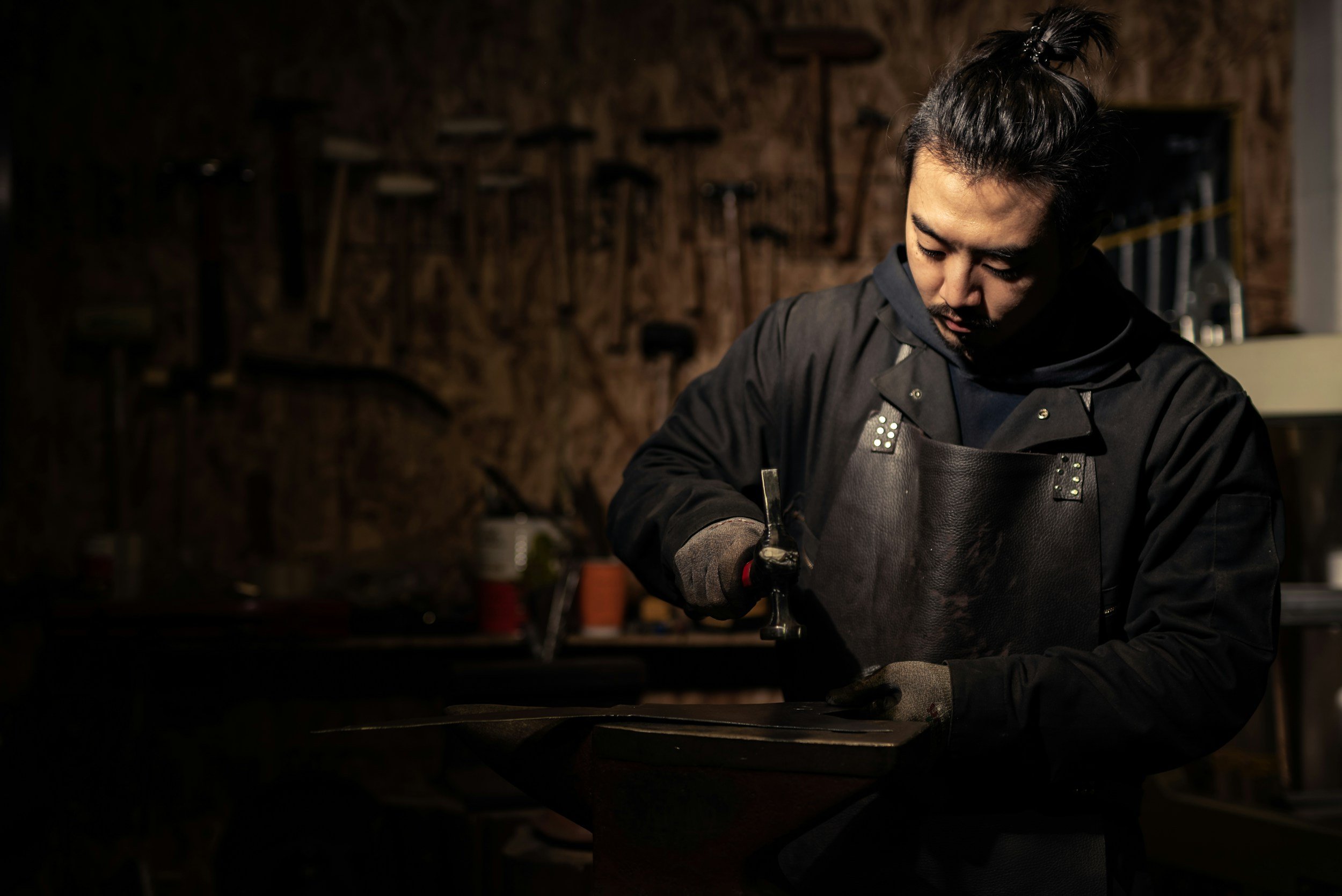
Excellence Requires Genuine Belief
Sustained excellence rarely emerges from effort alone.
People can perform competently in roles they do not fully believe in, but it is difficult to develop true mastery when there is a deep disconnect between what we do and what we believe matters.
Belief creates energy, persistence, and resilience - the qualities required to navigate complexity and setbacks.
This is why the Heart component of the framework is so important. Direction and meaning often determine whether effort becomes sustainable over time.

Letting Go Creates Space for What Comes Next
Progress in life and career is not only about choosing what to pursue.
It is also about recognising what no longer fits.
Roles, identities, ambitions, and paths that once made sense may eventually stop reflecting who we are becoming. Yet many people continue holding on to them out of habit, security, or fear of uncertainty.
But meaningful change rarely happens while we remain tightly attached to the past.
In nature, growth often requires cycles of release and renewal. New possibilities emerge only when space is created for them.
The same principle applies to our decisions.
Sometimes the most important step is not adding something new, but letting go of what no longer belongs.
By doing so, we create the conditions for new directions, opportunities, and identities to emerge - often ones that are more aligned with who we are becoming.